Why Surat’s Top Industrialists Are Resigning from the Grid This April (The Solitech Solar Power Revolution)

Why Surat’s Top Industrialists Are Resigning from the Grid This April (The Solitech Solar Power Revolution)

For years, solar was treated like a “nice‑to‑have” add‑on—just another line on the expense sheet, not something that could actually change the way a business runs. But in 2026, something has quietly shifted. Today, solar isn’t just saving money; for many homes and factories, it’s turning into a real‑life pocket machine, quietly working in the background and paying back every single day.

Nowhere is this shift clearer than in Surat. This city is the heartbeat of textiles, diamonds, and a wide range of manufacturing units. Every owner knows one thing very well: if electricity costs go up or power becomes unreliable, profits start to shrink. In late March and early April 2026, when electricity tariffs jumped again and smart‑meter throttling became the new reality, many of Surat’s top industrialists sat back and asked a simple, honest question: “Why should we keep begging the grid for power when we can create our own?”

No business owner wants to lose money. If you were to sit down and list your monthly expenses, one thing would stand out: the electricity bill. For many factories, that number is in the lakhs, and with each passing year, the grid keeps getting more expensive and less predictable. That’s why Surat’s visionary owners aren’t just reacting to high bills—they’re rethinking the whole energy story. They’re turning from power consumers into power producers, using Solitech Solar to build energy independence right on their rooftops.

The “power cut” reality that Surat factories live with

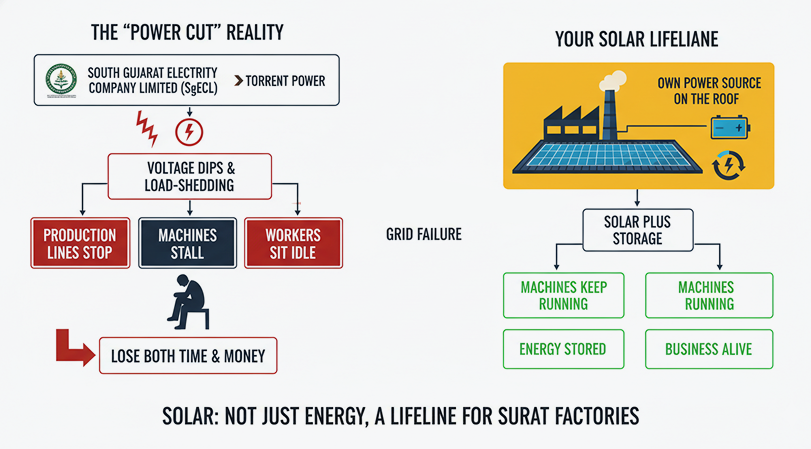
If you’ve been around Surat, you’ve heard the stories: power cuts, voltage dips, and load‑shedding notices from South Gujarat Electricity Company Limited (SgECL) and Torrent Power. These aren’t just news headlines—they’re real‑life disruptions that hit your factory:

  • Production lines stop.
  • Machines stall.
  • Workers sit idle.
  • You lose both time and money.

In those moments, all the planning and hard work can feel like it’s being washed away by a single grid failure.

The “power cut” reality that Surat factories live with

But imagine this: what if your factory already had its own power source on the roof?

  • When the grid goes down, your machines keep running on solar plus storage.
  • The energy you generated earlier doesn’t vanish-it comes back to use when you need it most.

This is exactly what Surat’s top industrialists are starting to see solar as: not just an energy source, but a lifeline that keeps business alive when the grid throws a tantrum.

1) Freedom from the grid tax and surcharge trap

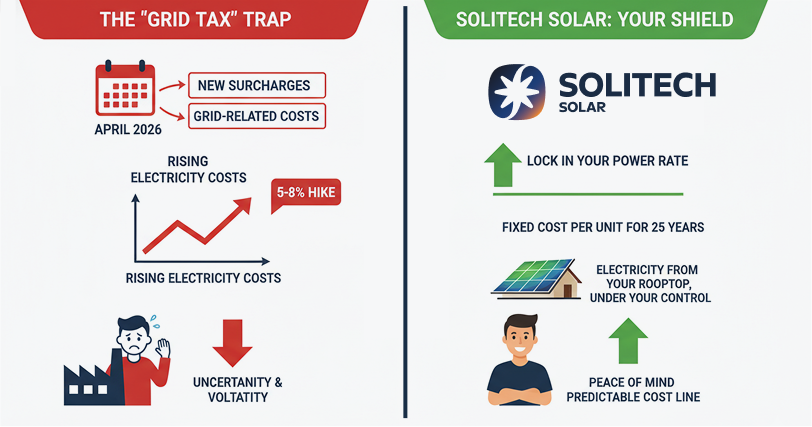
April is the start of the new financial year, and with it come new numbers everywhere—new tariffs, new surcharges, and new “grid‑related costs.” Even the cost of manufacturing solar panels has gone up by around 5–8% in 2026.


But here’s the interesting twist:


If you install a Solitech Solar system, you’re not just adding equipment—you’re locking in your power rate for the next 25 years.


  • While your competitors sweat over every new tariff hike, your cost per unit from solar stays almost fixed.
  • Your electricity isn’t coming from an ever‑rising grid bill; it’s coming from your rooftop, under your control.
Freedom from the grid tax and surcharge trap

For Surat’s textile and diamond units, this stability is priceless. It turns uncertainty into peace of mind, and volatility into a predictable cost line on the balance sheet.

2) Smart‑grid throttling—why your machines should never stop

In 2026, grids are smarter—but that doesn’t always mean easier for factories.

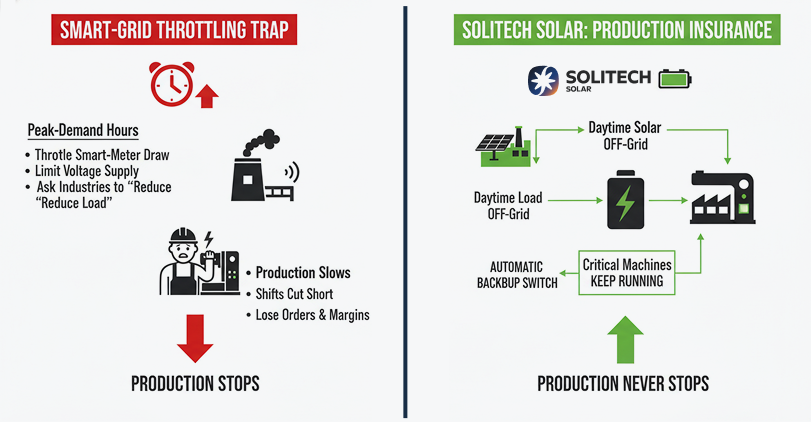
During peak‑demand hours, DISCOMs often:

  • Throttle smart‑meter draw.
  • Limit voltage supply.
  • Ask industries to “reduce load.”

What that really means on the shop floor:

  • You slow down your production.
  • Shifts get cut short.
  • You lose orders and margins.

Solitech Solar helps factories escape this trap.

  • With rooftop solar, your daytime load is taken off the grid.
  • With battery storage, critical machines keep running even when the grid blinks.
  • If there’s a voltage fluctuation or a small outage, the system automatically switches to backup, so your line doesn’t stop for even a second.

This isn’t just green energy-it’s production insurance built into your roof.

3) Green‑certified value for Surat’s exporters

If you export textiles, diamonds, or other goods to international markets, your carbon footprint is now part of your business strategy, not just an environmental side‑note.

Big buyers in Europe and North America ask questions like:

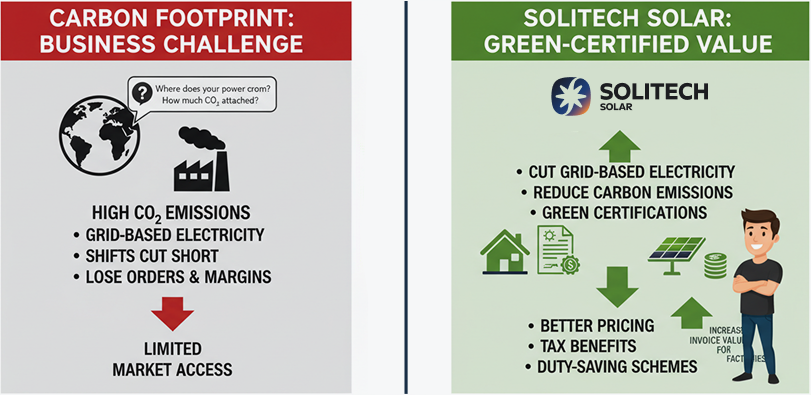
  • Where does your power come from?
  • How much CO₂ is attached to your production process?

Surat’s leading textile units are already using Solitech Solar to answer those questions with confidence:

  • They cut their grid‑based electricity use.
  • They reduce their overall carbon emissions.
  • They position themselves for green certifications and sustainability listings.

In many cases, that opens the door to:

  • Better pricing.
  • Tax benefits.
  • Duty‑saving schemes for “green‑made” products.
In other words, Solitech Solar isn’t just lowering your bill—it’s helping you increase your invoice value in the global market.
Green‑certified value for Surat’s exporters

This isn’t just green energy-it’s production insurance built into your roof.

4) Power that doesn’t take a holiday in the heat

Surat’s weather is straightforward: it gets hot, very hot, and then a bit hotter. In such conditions, any system that slows down under the sun isn’t going to work for long.

Solitech Solar’s panels are built for this reality:

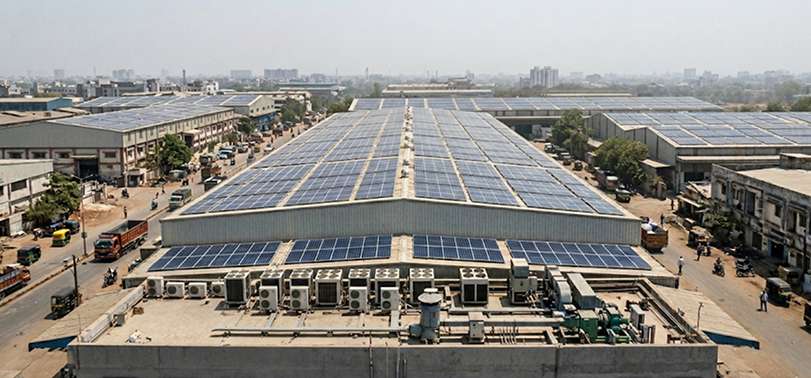
  • They are high‑efficiency, so they generate more power in less space—important when your roof is already packed with equipment.
  • They are designed to handle dust, humidity, monsoon rains, and intense heat without a steep drop in performance.

In simple terms: when the sun is strongest, your panels are happiest.

  • That’s why technically aware industrialists in Surat don’t look at solar as a “trial project.” They see it as a long‑term partner that will keep working, even when the weather is at its worst.

5) The April 1st move that changes everything

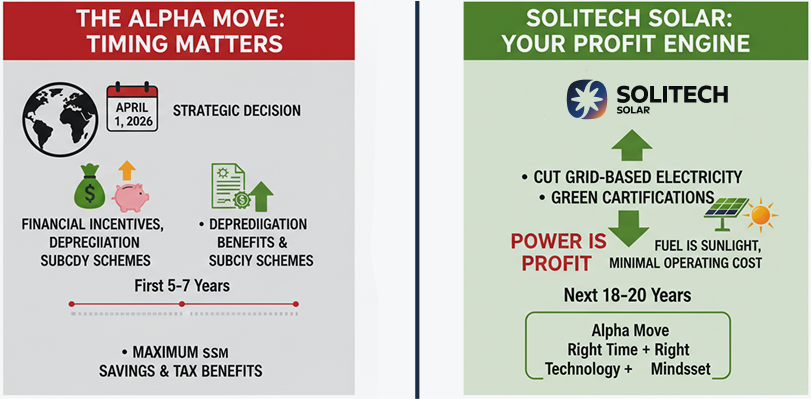
Signing your Solitech Solar agreement from April 1, 2026 is not just a date on a calendar—it can be a strategic decision for your business.

Why?

  • Many financial incentives, depreciation benefits, and subsidy schemes align with the new financial year.
  • The first 5–7 years become a period of maximum savings and tax benefits.
  • After that, for the next 18–20 years, the power you generate is essentially profit—because your “fuel” is sunlight, and your operating cost is minimal.

We call this the Alpha Move—not just installing solar, but installing it at the right time, with the right technology, and with the right mindset.

The April 1st move that changes everything

This isn’t just green energy-it’s production insurance built into your roof.

6) Turning your roof into a money‑making machine

Solitech Solar isn’t only about cutting your electric bill. It’s about turning your rooftop into a revenue center.

Our AI‑powered dashboard does something simple but powerful:

  • It tracks, in real time, how much carbon you’re saving by using solar instead of grid power.
  • From that, it calculates how many carbon credits your factory is generating.

Those credits can then be:

  • Sold to large global companies trying to meet their emission targets.
  • Used to enhance your sustainability profile in tenders and export contracts.

For Surat’s textile and diamond exporters, this is a huge advantage—you’re not just saving money, you’re creating a second income stream from your roof.

FAQs

Can a solar plant really run all the machines in a factory?

Yes. Solitech Solar starts by understanding your actual load—from small fans and lights to heavy compressors and motors. Based on that, we design a system that can comfortably power your entire production line without any compromise.

What about maintenance in rainy or dusty conditions?

We don’t just install panels and leave. We offer robotic cleaning systems and hydrophobic coatings that keep dust from sticking and help rain wash away dirt naturally. That means your panels stay clean and efficient, even in Surat’s dusty, humid weather.

Do we have to disconnect from the grid after installing solar?

No. We usually recommend an on‑grid or hybrid system that lets you:

  • Use solar power during the day.
  • Export surplus power to the grid when you produce more than you consume.
  • Use the grid as a backup during low‑sun periods or for maintenance.

Your factory keeps running smoothly, with the best of both worlds.

How is Solitech Solar different from other local installers?

Most local installers are just that—installers.

Solitech Solar is an energy partner. We provide:

  • Tier‑1 technology and high‑quality panels.
  • Real‑time AI monitoring of your system’s performance.
  • Strong after‑sales service so you’re never stuck with a “silent” system.

It’s the difference between a one‑time job and a long‑term relationship.

Will factory insurance change after installing solar?

Solar systems from Solitech Solar are built to international safety and fire‑safety standards. In many cases, this actually improves your risk profile. Some insurers even offer lower premiums because of the safety features and structured design of the system.

A smart businessman doesn’t gamble. He looks at the numbers, weighs the risks, and then makes a decision that tilts the game in his favor.

If Surat’s top industrialists are quietly “resigning from the grid” this April, it’s not a trend—it’s a statement. The future of power in Surat is not just about buying electricity. It’s about generating it, controlling it, and using it to grow.

Have you prepared your factory for this power revolution?

If not, it’s time to start the conversation.

Contact Solitech Solar today and let us create a customized energy blueprint that matches your current load, your future expansion, and your long‑term ambition. Your roof is already there—let’s turn it into the strongest asset on your balance sheet.

RELATED BLOG

The June 2026 Deadline Why Non-DCR Panels Could Void Your Industrial Subsidy and Grid Approval

The June 2026 Deadline: Why Non-DCR Panels Could Void Your Industrial Subsidy and Grid Approval

2026 has arrived. If you are also thinking of installing solar in 2026, whether for business or in industry, then make a special note of June 1, 2026. Many rules are changing on industrial solar. According to the new rules of the Government of India, all the devices connected to the grid are going to be changed. Many customers get cheated when they plan to install solar because the company doesn’t deliver as promised. Many solar companies show high-quality panels and sell very low-quality and cheap panels. In one way, industrial solar needs more kilowatts. This year, if your panels are not made in India, you may lose lakhs of subsidy for your business. This is something to keep in mind. It is also possible that the DISCOM may not give permission at all. Today we will discuss this serious topic in detail:

Read More...