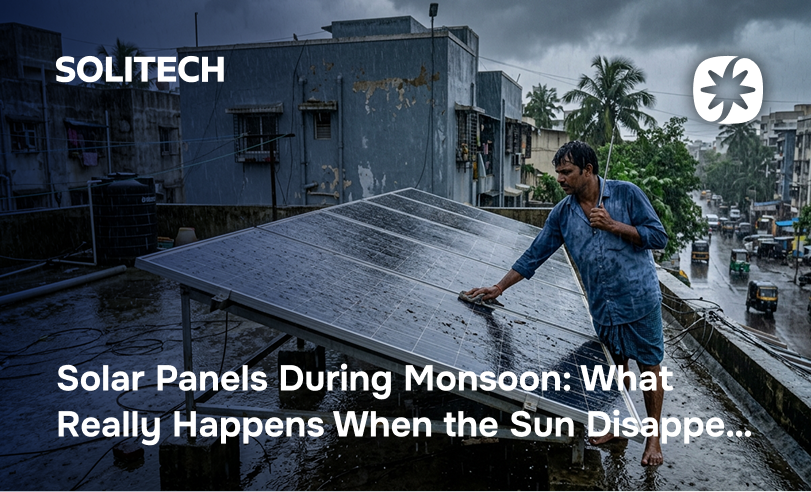
Solar Panels During Monsoon: What Really Happens When the Sun Disappears

Solar Panels During Monsoon What Really Happens When the Sun Disappears-main


Monsoon raises a common worry: when skies turn grey and rain pours for days, do solar panels simply stop working? For homeowners and businesses weighing solar investments in India’s rain-fed climate, this question is both practical and emotional. As someone who has worked on rooftop and commercial solar projects across Gujarat, Maharashtra and the eastern states, I have seen this concern often – and the answer is more reassuring than many expect.

Why people worry about solar performance during monsoon

These are valid concerns – but they do not tell the whole story.

As India’s electricity demand is expected to double by 2040 due to urbanization and industrial expansion, this shift toward self-generation is becoming strategic, not just economical.

Do solar panels work on cloudy and rainy days?

Yes. Modern photovoltaic (PV) panels generate electricity from both direct sunlight and diffuse light scattered by clouds. On a heavily overcast day a rooftop system will produce less than on a bright sunny day, but it rarely produces zero power. Many homes and businesses continue to draw useful electricity from their panels during monsoon spells.

How panels generate electricity without direct sunlight

Solar cells convert light photons into electricity. That process does not strictly require direct rays; scattered daylight still contains photons that panels can harvest. Think of it like a sponge: it soaks up water whether the drops fall straight on it or are misted from all directions. The amount collected is less on a cloudy day, but it is still meaningful.

Reduced generation vs zero generation

Reduced generation Zero generation
Expect a drop – commonly 20–60% on very cloudy or rainy days, depending on cloud density, time of day, and system orientation. Extremely unlikely unless the panels are physically covered (heavy mud, thick debris) or the system is shut down for maintenance. Even light rain typically will not stop production.

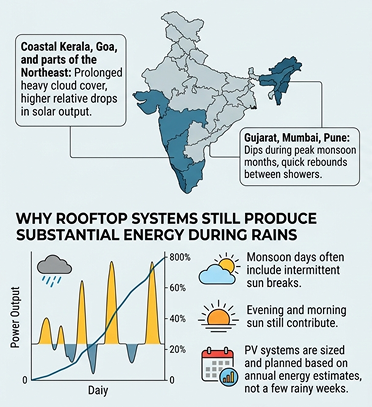
Typical impact of monsoon on solar output in India

Typical impact of monsoon on solar output in India

Monsoon effects vary by region. Coastal Kerala, Goa and parts of the northeast see prolonged heavy cloud cover and higher relative drops than central and western states. In Gujarat, Mumbai and Pune, you may notice dips during peak monsoon months but quick rebounds between showers. Across India rooftop systems still produce a substantial portion of their annual energy during rains because:

How annual solar production remains strong despite seasonal fluctuations

Solar planning looks at year-round generation. While short-term weather affects daily output, the cumulative energy over 12 months accounts for monsoon dips. Many Indian users find their yearly generation closely matches pre-installation estimates because design, panel selection and orientation consider seasonal patterns.

Common monsoon challenges and how to handle them

Heavy cloud cover

Expect lower output; this is normal. Check monthly averages rather than daily numbers.

Water accumulation

Poor rooftop slope or blocked drains may cause standing water. Ensure mounting systems provide adequate tilt and drainage.

Debris buildup

Leaves, twigs and mud can shadow panels. Periodic cleaning or preventive mesh on drains helps.

Reduced sunlight hours

Manage expectations; consider energy storage or grid-tie options to maintain supply during prolonged cloudy periods.

Practical tips to maintain performance during monsoon

Why solar remains a reliable long-term investment

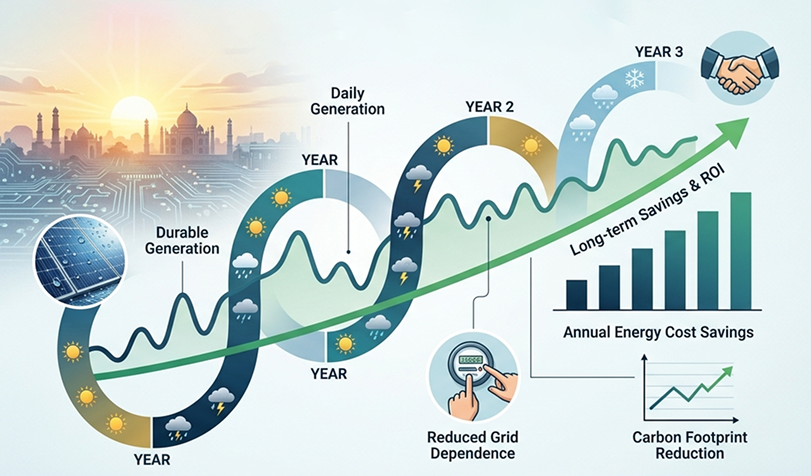
Seasonal weather is a normal part of any renewable energy investment. Solar panels are resilient, durable, and generally designed to withstand heavy rain, wind, and temperature shifts common in Indian climates. While monsoon temporarily reduces daily generation, the system continues contributing to your energy needs and reduces grid dependence across the year. For businesses and households aiming to lower energy bills and carbon footprints, the long-term return remains strong.

Why solar remains a reliable long-term investment

Indian context: states and patterns

Common myths debunked

Frequently Asked Questions

Do solar panels generate electricity on cloudy days?

Yes. They produce less, but still generate meaningful electricity from diffuse light.

Can rain damage solar panels?

Generally no. Panels are weatherproof. Damage usually comes from poor installation, flying debris, or heavy impact.

Will my electricity bill increase during monsoon?

You may buy more grid power on cloudy days, so short-term bills can rise slightly. Annual bills typically reflect system performance over the year.

How much generation drop is normal during rainy weather?

Expect anywhere from 20-60% drop on very cloudy/rainy days; the exact figure depends on local conditions.

Do solar panels need extra maintenance during monsoon?

Basic checks help: clear drains, remove debris, and inspect mounting/roof seals. Deep cleaning is rarely needed unless panels are soiled.

Conclusion

Monsoon may dim the daily output from rooftop and commercial solar systems, but it does not switch them off. Modern panels keep producing on cloudy and rainy days, and rain often helps by cleaning panels. For Indian homeowners, businesses, and prospective buyers, the right perspective is annual performance – not a few wet weeks. With proper installation and basic monsoon-ready maintenance, solar remains a dependable, long-term energy choice. If you would like, Solitech Solar can review your rooftop layout and monsoon readiness to ensure your system performs reliably through the seasons. Would you like a simple checklist for pre-monsoon prep?

RELATED BLOG

The June 2026 Deadline Why Non-DCR Panels Could Void Your Industrial Subsidy and Grid Approval

The June 2026 Deadline: Why Non-DCR Panels Could Void Your Industrial Subsidy and Grid Approval

2026 has arrived. If you are also thinking of installing solar in 2026, whether for business or in industry, then make a special note of June 1, 2026. Many rules are changing on industrial solar. According to the new rules of the Government of India, all the devices connected to the grid are going to be changed. Many customers get cheated when they plan to install solar because the company doesn’t deliver as promised. Many solar companies show high-quality panels and sell very low-quality and cheap panels. In one way, industrial solar needs more kilowatts. This year, if your panels are not made in India, you may lose lakhs of subsidy for your business. This is something to keep in mind. It is also possible that the DISCOM may not give permission at all. Today we will discuss this serious topic in detail:

Read More...