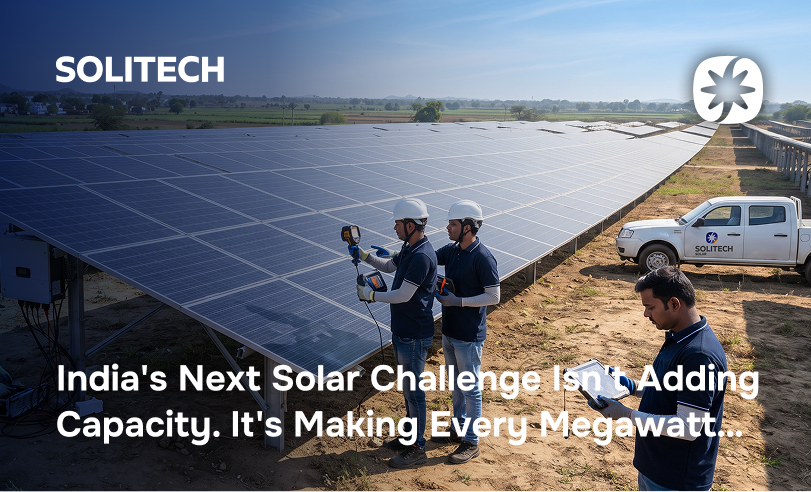
India's Next Solar Challenge Isn't Adding Capacity. It's Making Every Megawatt Perform Better.

India Next Solar Challenge Is not Adding Capacity. It is Making Every Megawatt Perform Better-main


Every few weeks another solar tender closes somewhere in India and another gigawatt gets announced. It sounds like progress, and it is. But anyone who has run a plant for a few years knows the number in the announcement is not the number that pays the bills. What pays the bills is how much energy each installed megawatt actually sends to the grid, summer after summer, through dust, heat and a long monsoon.

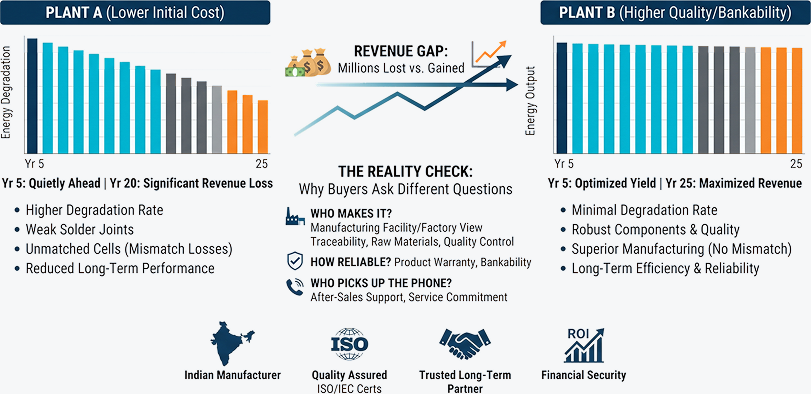
Two Plants, Same Size, Different Yields

On paper, two 10 MW plants are identical. By year five, one of them is often quietly ahead. The reasons are rarely dramatic: a little more degradation, a few weak solder joints, some cells that were never quite matched. None of it shows on a datasheet, yet over twenty-five years it adds up to far more than whatever was saved on price per watt. Anyone who has walked a plant floor at noon in May knows how hard the equipment works.

That is why buyers have started asking different questions when they look for a solar module manufacturer in India. Who makes it, with what, and who picks up the phone when something goes wrong?

Two Plants, Same Size, Different Yields

What Solitech Solar Does at the Factory

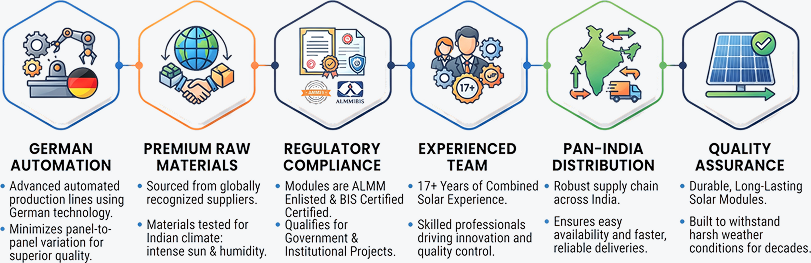
Solitech Solar is a Gujarat-based manufacturer, and it has grown quickly by paying attention to the unglamorous parts of the job. Its modules are built on automated lines using German manufacturing technology, which keeps panel-to-panel variation low. Raw materials come from globally recognised suppliers, because every component has to survive Indian sun and humidity for decades. The modules are ALMM enlisted and BIS certified, so they qualify for government and institutional work. Behind it all is a team with more than 17 years of combined solar experience, and a distribution network across India that keeps availability easy and deliveries faster.

What Solitech Solar Does at the Factory

Where the Modules Have Actually Worked

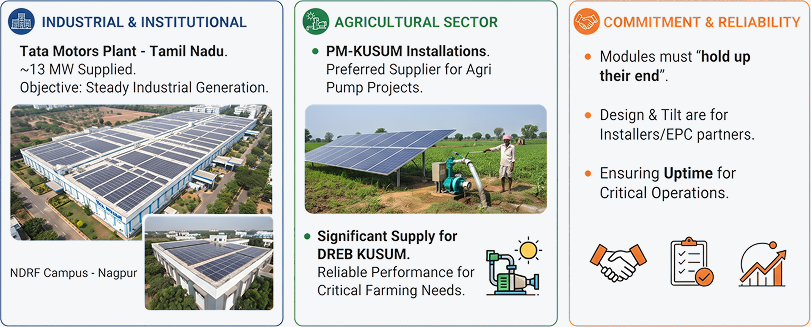
Reputation is built on installations, not brochures. Solitech modules supplied around 13 MW at a Tata Motors plant in Tamil Nadu, where steady industrial generation is the whole point, and they have gone into the NDRF campus in Nagpur as well.

Farms are a big part of the story too. Solitech is a preferred name in PM-KUSUM installations, with a lot of agricultural pump projects and significant supply for DREB KUSUM. A farmer running a pump cannot afford a weak panel. Tilt and system design stay with installers and EPC partners, of course. The module’s job is to hold up its end once they have done theirs.

Support Matters More Than People Admit

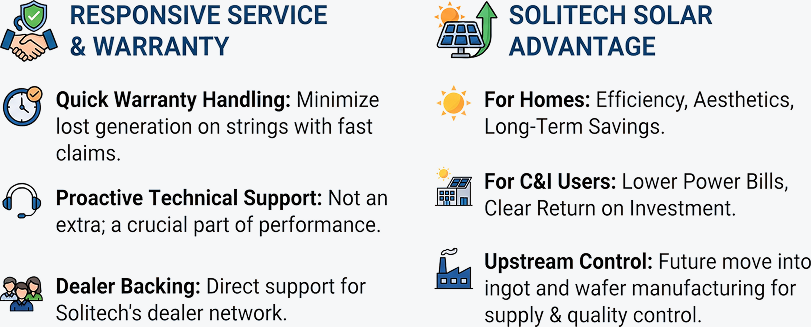
A module does not stop mattering after it ships. A claim that sits unanswered for weeks can mean weeks of lost generation on a string, so quick warranty handling and responsive technical support are part of performance, not an extra. Solitech Solar also backs its dealers directly.

For homes, the draw is efficiency, good looks and long-term savings. For C&I users, it is lower power bills and a clearer return. The company is also planning to move into ingot and wafer manufacturing, which should give it tighter control over supply and quality.

Conclusion

India will keep adding capacity, and that is good. Capacity gets announced. Performance gets earned over many years, one panel at a time. If you are an EPC, developer or distributor weighing module partners, it is worth speaking with the Solitech Solar team about your next project.

Frequently Asked Questions

Is Solitech Solar a good manufacturer?

It is Gujarat-based, ALMM enlisted and BIS certified, uses automated lines with German technology, and has supplied around 13 MW to a Tata Motors plant.

Are Solitech modules suitable for PM-KUSUM?

Yes. Solitech is preferred for PM-KUSUM installations, with extensive agricultural pump participation and DREB KUSUM supply.

Are Solitech modules ALMM listed?

Yes. They are ALMM enlisted and BIS certified, making them eligible for government and institutional projects.

Does Solitech install solar systems?

No. Solitech manufactures modules, and installation is handled by EPC companies and installers.

What after-sales support does Solitech offer?

Dedicated technical support, fast warranty assistance and dealer support.

Where are Solitech modules used?

Rooftops, C&I projects, agricultural pumps, government campuses and industrial plants.

Related Blog

Why Your Rooftop’s Potential is 20% Higher Than What Legacy Software Predicts

Why Your Rooftop’s Potential is 20% Higher Than What Legacy Software Predicts

Times have changed to the point where you don’t have to be as careful when buying gold as you do when installing solar or choosing a solar company. Most solar installations today use outdated software to show us how much sunlight will fall on your roof at each location, but when it is installed, you don’t actually see the sunlight falling. In fact, there is a lot of space on the roof of every house where sunlight can easily fall, but most companies do not inform us about this, and as a result we are not able to generate as much electricity as we want. Even though every person gets the fruits of their karma, they still do not stop deceiving others, which is often seen in solar companies. Initially, when it comes to visiting the site, they lure you in with their talk and then forcefully install it.

Read More...
Ultimate Step-by-Step Guide for Solar Panel Installation

Ultimate Step-by-Step Guide for Solar Panel Installation

If we look at it this way, the demand for solar energy is increasing day by day, not only in India but all over the world. Solar is one but its benefits are many. Which provides reliable energy in the long run. But the step-by-step guide given here may prove to be extremely important to you.

Read More...