Why Monsoon (Not Summer) Is the Real Stress Test for Your Solar System

Why Monsoon (Not Summer) Is the Real Stress Test for Your Solar System-breadcrumb-main


Most people assume summer is the toughest season for a solar system. More sun, more heat, more load – it seems logical. But ask anyone who has actually managed solar installations across India, and they will tell you a different story. Monsoon is where solar systems are truly tested. Heavy rainfall, humidity, cloud cover, lightning risk and waterlogging all combine to put real pressure on a system’s design and durability. This is exactly where the quality of your solar modules and mounting structure starts to matter more than the brand name on the invoice.

Summer Gets the Blame, Monsoon Does the Damage

Summer heat does reduce panel efficiency slightly, but well-designed modules are built to handle that. Monsoon, on the other hand, introduces a completely different set of challenges: moisture ingress, inconsistent sunlight, debris accumulation, and structural stress from wind and rain. A system that performs beautifully in April can show cracks, both literal and electrical, by August if it was not built for India’s monsoon reality.

This is why choosing a Tier 1 Solar Module Manufacturer with proven weather resilience matters far more than choosing the cheapest quote on the table.

What Actually Happens to a Solar System During Monsoon

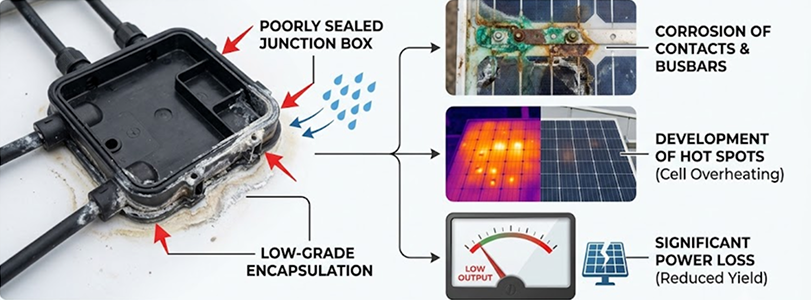
Moisture and humidity:

Poorly sealed junction boxes and low-grade encapsulation allow moisture to seep into the module. Over time, this leads to corrosion, hot spots, and reduced output.

Moisture and humidity

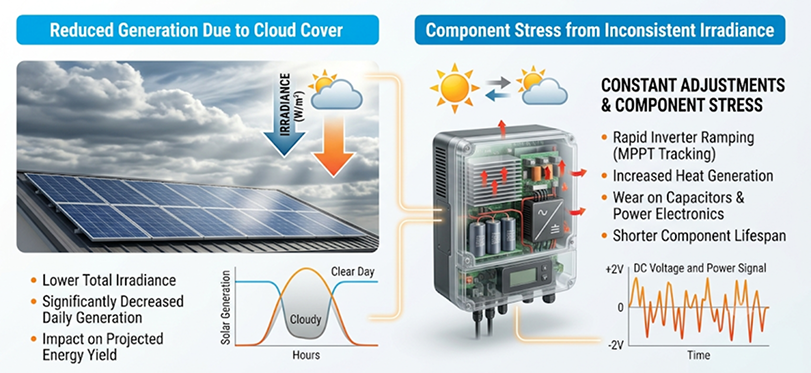
Reduced and inconsistent sunlight:

Cloud cover naturally lowers generation, but the bigger issue is inconsistent irradiance, which stresses inverters and electrical components that are constantly adjusting.

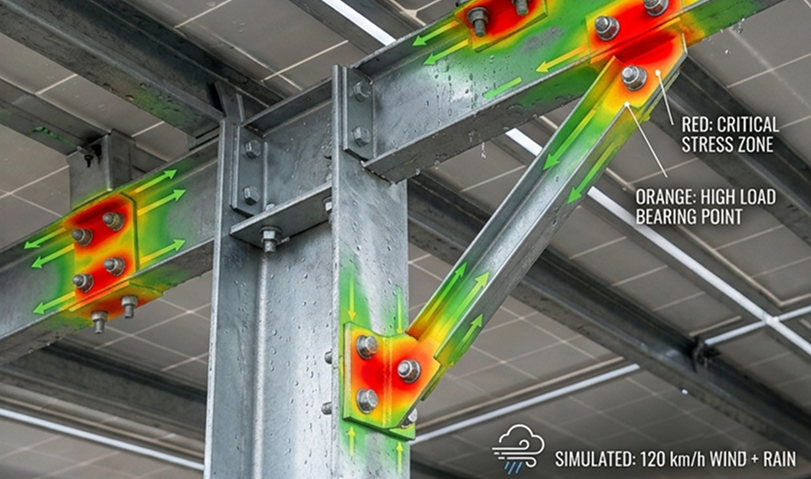
Mounting structure stress:

Heavy wind and rain test the strength of the mounting structure. Weak or rusted structures can shift, tilt, or loosen fasteners, affecting long-term alignment and safety.

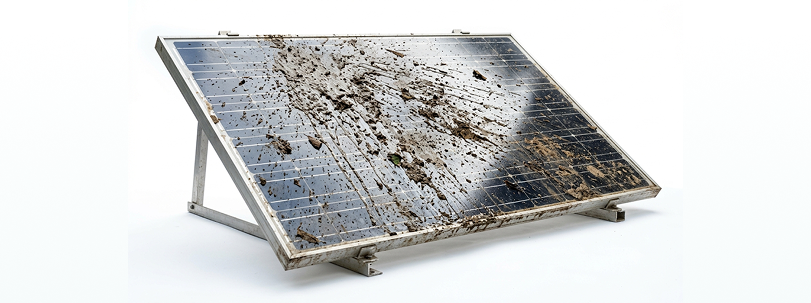
Dust, mud and debris buildup:

Ironically, rain does not always mean clean panels. Splashed mud and debris can settle on the module surface, reducing efficiency until the next proper cleaning.

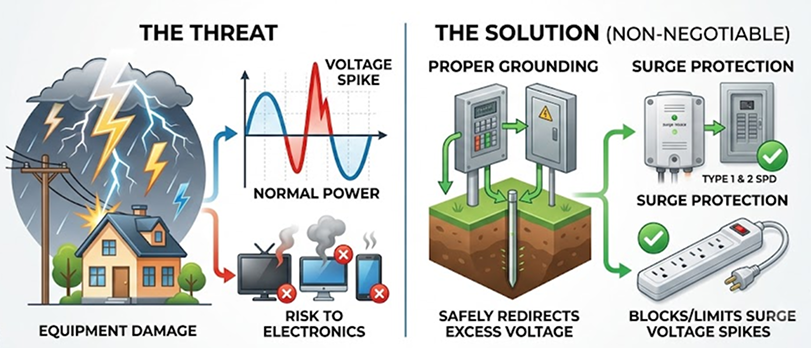
Lightning and electrical surges:

Monsoon season increases the risk of voltage spikes, making proper grounding and surge protection non-negotiable.

Lightning and electrical surges

Why Solitech Solar Is Built for This Season, Not Just for Sunshine

This is where Solitech Solar approaches manufacturing differently, building for durability across every Indian season, monsoon included, not just peak-sun performance.

Solitech Solar modules are manufactured using German manufacturing technology and precision engineering, which means tighter sealing, better encapsulation, and stronger resistance to moisture ingress. As one of the Best Solar Module Manufacturers in India, Solitech Solar follows strict Tier 1 quality standards, so the modules installed on your rooftop or field are the same standard trusted by large industrial projects like the Tata Motors plant in Tamil Nadu and the NDRF campus in Nagpur.

Being ALMM Enlisted and BIS Certified, Solitech Solar modules meet the quality benchmarks required for demanding, real-world Indian conditions, not just controlled testing environments. This is a big reason why Solitech Solar has become a preferred PM KUSUM Solar Panel Manufacturer for farmers who cannot afford downtime during a crucial agricultural season.

Monsoon-Ready Doesn't Stop at the Module

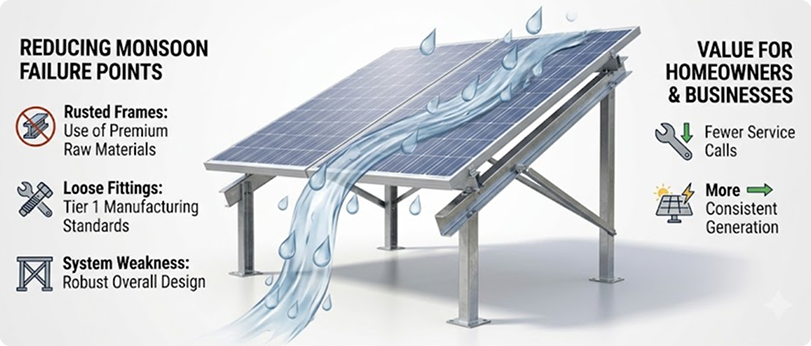
A solar system is only as strong as its weakest component, and mounting structures are often overlooked. Solitech Solar’s premium raw materials and Tier 1 manufacturing standards extend to the overall system design, helping reduce the common monsoon failure points like rusted frames and loose fittings.

For homeowners exploring Rooftop Solar Panel Manufacturer options, or businesses evaluating a Commercial Solar Panel Manufacturer, this seasonal durability translates directly into fewer service calls and more consistent generation once the rains arrive.

reducing-monsoon-fail-point

A Simple Monsoon Solar Checklist

  • Inspect junction boxes: Check for any signs of water entry before monsoon peaks.
  • Clean panels post-rain: Remove settled mud or debris once heavy showers pause.
  • Verify grounding: Ensure earthing and surge protection are intact and functional.
  • Check mounting structure: Look for loose bolts or early rust signs on the frame.
  • Monitor generation data: A sudden, unexplained drop in output is often the first warning sign.

The Real Takeaway

Summer might be when solar gets the most attention, but monsoon is when a system’s true build quality is revealed. If you want a solar setup that performs reliably every single season, not just the sunny ones, the manufacturer’s engineering standards matter as much as the panel’s efficiency rating.

As a trusted Indian Solar Module Manufacturer, Solitech Solar is engineered to handle exactly this kind of seasonal unpredictability, which is why it continues to be a preferred choice among EPC companies, distributors, and PM-KUSUM farmers across the country.

Frequently Asked Questions

Does monsoon permanently reduce solar panel efficiency?

No. Generation dips temporarily due to cloud cover, but output returns to normal once sunlight is consistent, provided the modules are undamaged.

Can solar panels get damaged in heavy rain?

Rain itself is not harmful, but poor sealing, weak mounting structures, or inadequate grounding can cause damage over time.

How often should panels be cleaned during monsoon?

Cleaning after heavy showers, once mud or debris settles, is usually enough to maintain performance.

Is Solitech Solar suitable for high-rainfall regions?

Yes. Solitech Solar modules use German manufacturing technology with strong sealing suited to varied Indian climatic conditions.

Do PM-KUSUM installations need special monsoon care?

Yes, especially routine checks on mounting structures and grounding, since these installations are often in open, exposed fields.

Why choose Solitech Solar over other manufacturers in monsoon-prone regions?

Solitech Solar combines Tier 1 certification, ALMM enlistment, BIS certification, and N-Type TOPCon technology with German precision engineering, an edge in build quality generic modules cannot match.

Related Blog

Top 5 Solar Companies for KUSUM Project in India (2026) – The Ultimate Guide

Top 5 Solar Companies for KUSUM Project in India (2026) – The Ultimate Guide

PM-KUSUM helps farmers replace diesel pumps with solar power and earn extra income by selling surplus units to the grid. With the scheme extended to March 2027 for eligible projects, choosing the right solar company matters more than ever. ALMM-listed, BIS-certified modules and strong manufacturing quality decide how long a KUSUM installation performs in the field.

Read More...
Energy Independence Why Indian Homes and Businesses Are Choosing Solar Now

Energy Independence: Why Indian Homes and Businesses Are Choosing Solar Now

Ten years ago, when a homeowner in Gujarat mentioned solar panels, neighbors asked, “How much will that save on my electricity bill?” Today, the conversation has shifted dramatically. The question is no longer just about savings – it’s about control. Control over your energy source, your costs, and your resilience when the grid falters.

Read More...